
March 20, 2026
A Review of Bamako (2006)
A Review of Bamako (2006)

Opening scene from Bamako featuring a singer performing
Introduction
Bamako is a 2006 drama film directed by Abderrahmane Sissako. It presents a fictional trial set in a backyard in the outskirts of Bamako, the capital of Mali, where the World Bank and IMF are put on trial for their role in Afrika's poverty. The movie shows the trial taking place against the backdrop of daily life in the city, with Malians and Europeans debating whether the financial problems in Afrika are caused by corruption and mismanagement within Afrikan nations or by the interests of powerful Western institutions like the World Bank and IMF. The film also explores the lasting effects of European colonisation on Afrikan societies.
Parallel Storylines
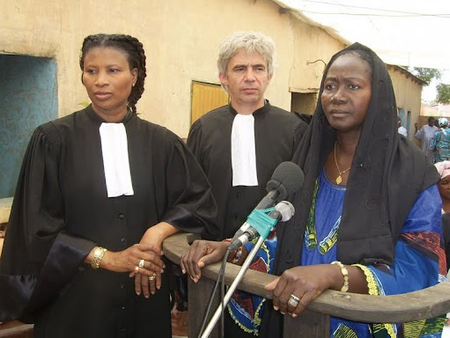
Courtroom scene set in a courtyard with lawyers and witnesses
The story unfolds in two parallel ways: the courtroom proceedings and the personal lives of people living in the courtyard. While the trial focuses on the economic consequences of structural adjustment policies, debt, and privatization on Afrikan society, the film also shows how these issues affect the lives of ordinary people. The witnesses and lawyers talk about how debt payments and foreign policies have worsened poverty, undermined local development, and broken down infrastructure.
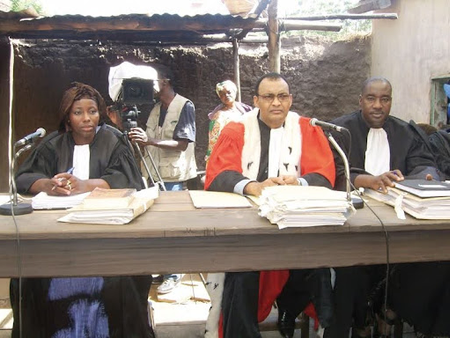
Panel of legal figures seated during the trial
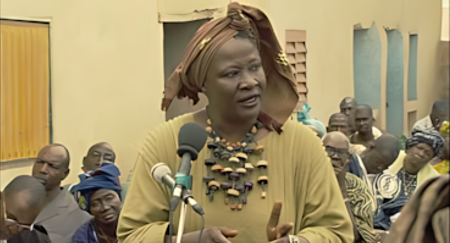
Audience gathered in the courtyard observing proceedings
Mele and Chaka

Mele performing as a lounge singer
A key part of the film is the relationship between Mele, a lounge singer, and Chaka, who is unemployed. Their marriage is falling apart as they struggle under economic pressure. Mele returns home after a difficult night of work to find her courtyard transformed into the scene of a trial, where the World Bank and IMF are being held accountable. Her sister, along with farmers and other locals, speaks out against these global institutions. As the trial goes on, the film contrasts the seriousness of the courtroom with the lively Malian life around them, where children play and people go about their daily routines. This shows how deeply interconnected everyday life is with systemic injustice in many Afrikan societies.
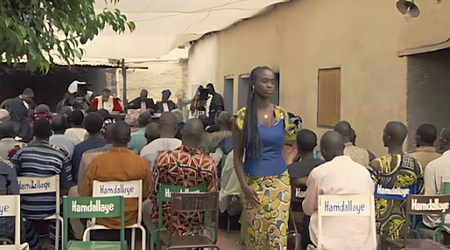
Wide shot of the courtyard trial with community members present
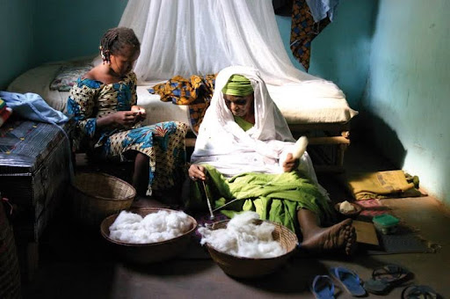
Domestic interior scene reflecting everyday life
The "Film-within-a-Film": Death in Timbuktu as a Metaphor
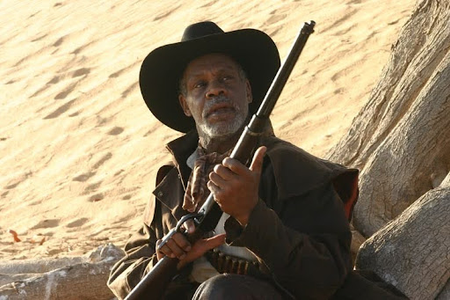
Danny Glover as a lone gunslinger in desert setting
Woven into the story is a film-within-a-film titled Death in Timbuktu, a Western parody set in an Afrikan desert town. A group of gunmen dressed as cowboys ride into Timbuktu, creating an odd collision of Hollywood imagery and Afrikan landscape. Danny Glover appears as a lone gunslinger, and the scene carries the quiet tension of a classic showdown. But the expected heroism never arrives — the violence that follows is sudden, chaotic, and without resolution. Characters are shot down quickly, and nothing is gained. Sissako borrows the language of Western cinema only to hollow it out, using the segment to reflect how external intervention in Afrika so often mirrors that same pattern: abrupt, destructive, and answerable to no one.
Unresolved Justice: The Absence of a Verdict
By the end of the movie, the trial has no clear resolution. This lack of a definitive verdict emphasises the ongoing struggle for justice and the persistence of economic inequalities. The film leaves viewers with the sense that true change is still far from being realised.