
April 5, 2026
A Review of Eyimofe (This Is My Desire)
In Eyimofe (This Is My Desire), the contemporary Nigerian experience of migration, popularly referred to as 'Japa', is not shown in the way we expect. There are no departure gates, no boarding announcements, and no soaring aircraft disappearing into the open sky. Instead, the film lingers in stillness.
Rather than showing movement towards elsewhere, the film uses space and everyday environments to visualise the desire and frustration associated with Japa.
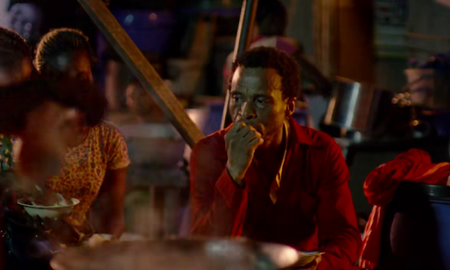
Film still from Eyimofe

Eyimofe poster
Waiting as a Visual Motif
In Eyimofe, waiting shapes the rhythm and emotional lives of its characters. Visually, waiting becomes a stand-in for migration itself. Mofe waits in the lawyer’s office, attempting to reclaim the money his sister saved before her death, money that now represents his only viable path out. He waits in immigration offices and other bureaucratic spaces that promise progress but deliver delay.
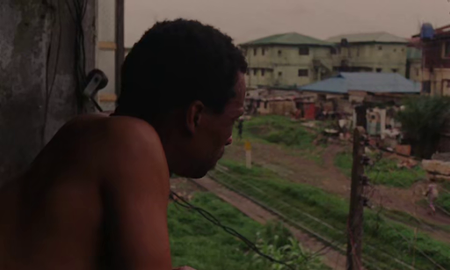
Mofe in a moment of waiting
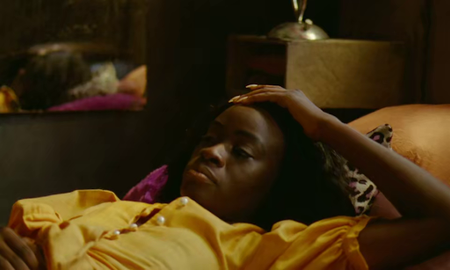
Rosa reclining in quiet suspension
Rosa’s waiting is more tranquil but no less profound. She waits quietly on a bus after work, replaying her conversation with Peter, her European patron, suspended between hope and uncertainty. She waits for a message that does not come. Another scenario is when she waits in Mama Esther’s house, the woman she hopes will help arrange her departure from the country, poised between dependence and the faint promise of departure. Her days are constantly filled with motion, yet emotionally she remains paused.
In these repeated moments, waiting becomes a visual substitute for migration itself. The desire to leave is present, but the body remains stuck despite aspiration, but visually it is stalled.
Spaces of Limitation vs. Aspiration
Spaces in Eyimofe are never neutral. Rooms, streets and buildings do more than contain the characters; they define the limits of what seems possible. The environment of the film becomes a commentary on class and opportunity.
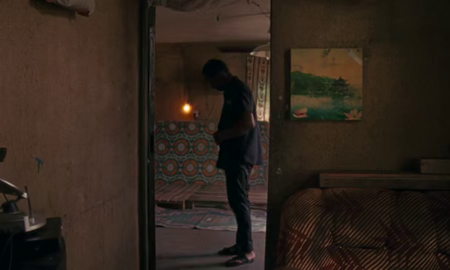

Contrasting interior spaces from the film
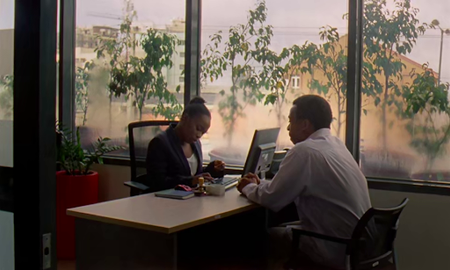
Bureaucratic office scene
In the film, there are spaces that constrict. Cramped living quarters where privacy barely exists. Noisy markets are dense with movement but thin in opportunity. Factories thick with heat, danger and repetition. Single-room flats where survival occupies every corner. These environments remind us constantly of economic insecurity and of lives lived within narrow margins.
In contrast, there are spaces that expand. Polished bank interiors. Rooftop restaurants overlooking city landscapes riddled with struggle. Island homes with large living rooms and soft lighting. Hotel rooms where conversation drifts casually to exchange rates, customs and global experiences. These spaces are composed and orderly, almost serene. They suggest ease, the kind of ease that comes from being financially secure.
The contrast is explicit, constantly reminding the characters and the viewer of where they are, not where they want to be. For Mofe, the factory reinforces his vulnerability, with its harsh lighting and confined workspaces. Later, when he begins working independently as an electrician, even the modest space of his own shop feels transformative. The shift in space reflects a shift in his dignity and self-perception.
Interiors as Emotional Traps
In Eyimofe, rooms often feel less like shelter and more like containment. Walls press inward. Ceilings sit low. Windows admit light sparingly. The physical environment mirrors the quiet accumulation of grief, frustration and resignation.
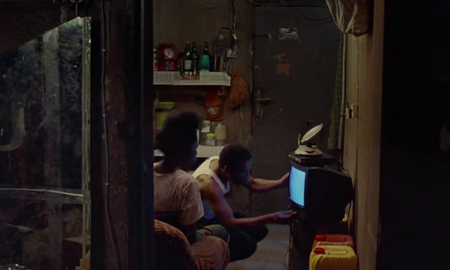

Interior still from the film
The apartment where Mofe’s sister and her children die becomes inseparable from loss. The factory’s electrical room functions similarly. It is narrow and hazardous, a place where Mofe is repeatedly frustrated and physically harmed, symbolising entrapment and danger.
In contrast, open spaces signal possibility. In Peter’s friends’ home, conversations about business deals take place beneath high ceilings and within expansive rooms. The rooftop diner, elevated above the city’s density, offers a literal hierarchy far removed from everyday Nigerian reality.
The contrasts are subtle but pointed. The factory’s electrical room stands in opposition to Mofe’s later workshop, where control replaces vulnerability. Rosa’s bedroom, sparse and constrained, stands against the hotel’s temporary elegance. In each case, space reflects interior life.
These physical spaces mirror psychological states of confinement, not merely economic but also emotional.
Costume as Aspiration and Survival
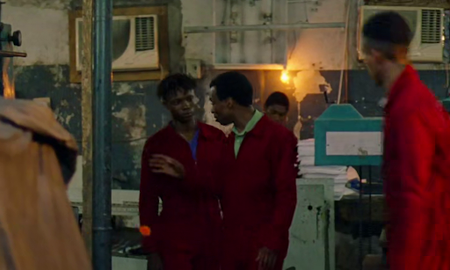
Mofe in his red factory jumpsuit
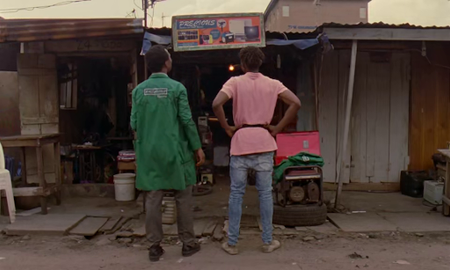
Mofe in his green work coat
Although secondary to setting, clothing in Eyimofe still contributes to the visual language of migration, often reflecting survival rather than self-expression.
Mofe’s red factory jumpsuit marks him immediately as labouring and replaceable. It situates him within a system. Later, when he works independently, the green coat he wears feels like a subtle transformation.
Rosa’s wardrobe carries a different tension. She dresses beautifully whenever she can, sometimes in outfits that feel aspirational. Yet the environments she inhabits do not always sustain that image. The dissonance between her presentation and her circumstances underscores the fragility of aspiration. She dresses not because she has arrived, but because she hopes to.
What the Film Refuses to Show: No Visual Escape
What is most striking about Eyimofe is not only in what it shows but also in what it withholds. The film denies the audience images typically associated with migration. There are no aeroplanes, airports, or journeys abroad. The familiar imagery of migration is conspicuously absent.
Instead, migration is represented through documents, particularly the passport, a physical symbol of possibility rather than fulfilment. Even the bureaucratic process is shown as precarious and corrupt, such as the immigration officer seated beneath an umbrella demanding ₦50,000 for documents.
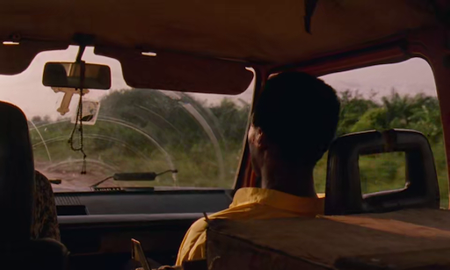
Road journey scene
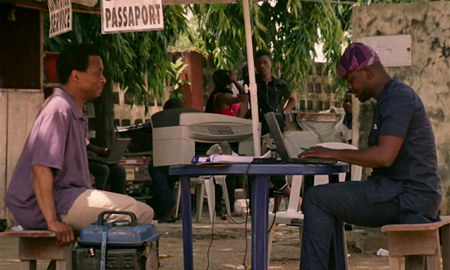
Passport and immigration-related scene
The only significant journey the film permits is inward when Mofe returns to his village carrying the bodies of his sister and nephews to his estranged father. Rather than moving forward, the film pulls him into the past.
Throughout the film, we remain largely within cramped interiors and restrictive environments. Expansive spaces such as bars, wealthy homes, and hotels appear only where economic privilege is evident. The film ultimately refuses to show progress or departure. In Eyimofe, migration is purely desire.
By denying visual escape and emphasising waiting, confinement, and spatial contrast, Eyimofe reframes Japa as a psychological and environmental condition. Migration is constrained by structural and economic realities, making desire, loss, and limitation central to the Nigerian experience. The film challenges the fantasy of escape, inviting viewers to confront the persistent barriers that shape the lives of those who remain.